
From Plantation Tour to Commitment
I'm Still HereThis flow traces the emotional and intellectual turning points of Austin's Sankofa journey through Southern Black history.
increasing Bearing strength in each event
 decreasing
Bearing strength in each eventdecreasingA Journey South

A Journey South
Shared travel
Austin joins the Sankofa trip, a three-day journey from Chicago toward Southern sites of Black history. Most participants travel in pairs that bring a Black student together with a white student.
Expectations tested
The journey begins as an educational program, but the histories it encounters will unsettle assumptions about what students already know. Austin enters the trip with a commitment to learning and leaves with a changed sense of personal connection to the past.
The Plantation's False Story
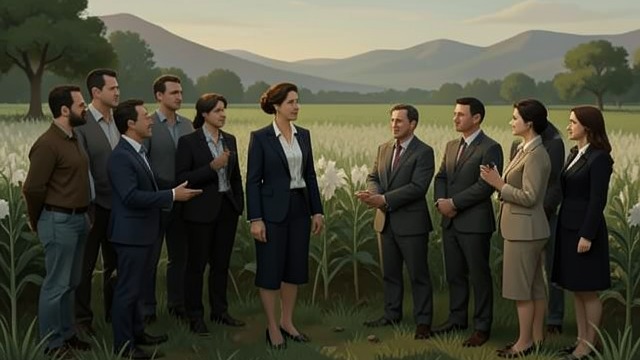
The Plantation's False Story
Romanticized slavery
The guides describe enslaved people as happy and their labor as less brutal than it was. Their account minimizes suffering and ends by inviting Black students to pick cotton.
The group's fracture
The spectacle of Black students picking cotton makes the distortion impossible to ignore. Black students are angry, while white students struggle to decide whether to trust the visitors or the people explaining the harm.
The Lynching Museum
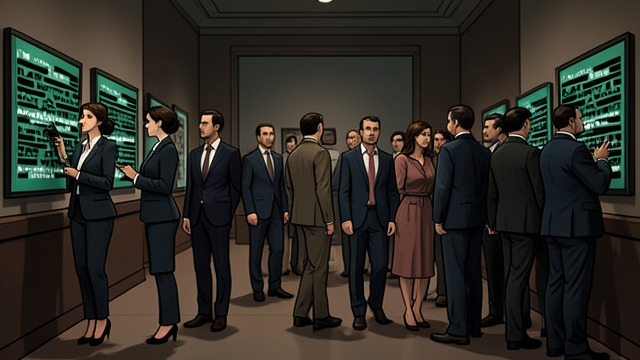
The Lynching Museum
Images of terror
The group enters a museum filled with photographs, newspaper accounts, and a postcard showing the spectacle of lynching. The exhibit makes racial violence visible as public entertainment and community practice.
History becomes immediate
The students walk in silence and emerge overwhelmed. Austin experiences a collapse between the distant past and the present, as the photographs seem to place living bodies into the history she has learned.
The Bus Conversation
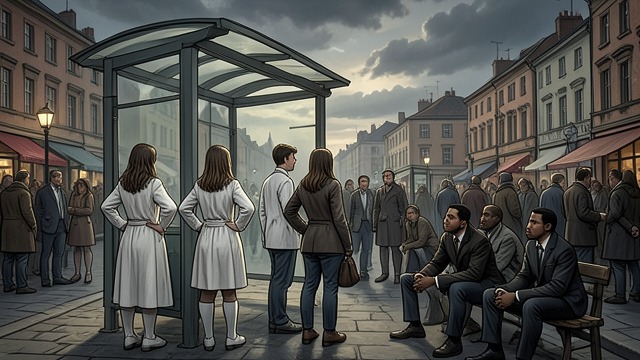
The Bus Conversation
Defensive reactions
White students say they did not know and insist they were not personally present in the past. Black students share family stories and challenge the effort to separate the images from contemporary white life.
Truth against politeness
A Black senior describes the history as evidence of white evil, breaking the expectation that Black students must protect white listeners from pain. Another white student acknowledges the suffering and promises to work against its repetition.
A Commitment to Act
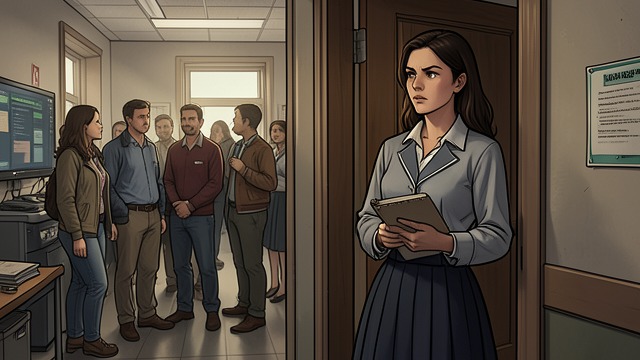
A Commitment to Act
A final declaration
Before leaving the bus, participants name how they will become agents of change. Austin cannot remember her exact words, but she knows the commitment was sincere.
The beginning of practice
She starts showing up at campus events, challenging hiring decisions, and creating small spaces for community. The trip does not provide a finished plan; it makes passivity feel impossible.
During Austin's freshman year of college
At the first major stop on the trip
At the trip's next historical stop
Immediately after leaving the lynching museum
At the end of the Sankofa trip
